
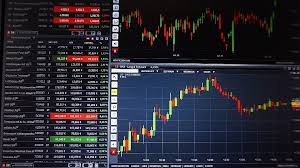
Comprehensive Guide to Forex Trading Education
The world of forex trading is vast and filled with opportunities for those willing to learn. It’s a market that operates around the clock and allows traders from all corners of the globe to engage in currency trading. For beginners looking to step into this dynamic field, a solid understanding of the forex market and its mechanisms is crucial. This guide aims to provide a thorough overview of forex trading education, equipping traders with essential knowledge and resources to succeed. If you’re interested in diving deeper into forex trading, you can also check forex trading education exglobal.pk for more resources.
Understanding Forex Trading
Forex, or foreign exchange, is the process of exchanging one currency for another, and it is one of the largest financial markets in the world, with a daily trading volume exceeding $6 trillion. Unlike other financial markets, forex trading does not have a centralized exchange; instead, it operates over-the-counter (OTC) through a network of banks, brokers, and individual traders. This decentralized structure provides unique opportunities but also entails specific risks.
Key Concepts in Forex Trading
Pips and Lots
A ‘pip’ stands for ‘percentage in point’, and it is the smallest price movement that can occur in the exchange rate of a currency pair. Understanding pips is essential for effectively managing your trade sizes and profits. Currency is bought and sold in units called ‘lots’, with a standard lot representing 100,000 units of currency, a mini lot 10,000 units, and a micro lot 1,000 units.
Currency Pairs
Forex trading involves currency pairs, which represent the value of one currency against another. The first currency in a pair is called the base currency, while the second is the quote currency. For example, in the EUR/USD pair, the euro is the base currency, and the US dollar is the quote currency. Understanding how these pairs work is fundamental to trading decisions.
Types of Forex Analysis
Successful trading requires thorough analysis of the market. There are three primary types of forex analysis: fundamental analysis, technical analysis, and sentiment analysis.
Fundamental Analysis
This analysis focuses on economic news and events that may affect currency values. Economic indicators, interest rates, inflation rates, and geopolitical events are all considered in fundamental analysis. Traders who employ this method look for trends and shifts in economic policy to predict currency movements.
Technical Analysis
In contrast, technical analysis relies on historical price data and chart patterns to forecast future price movements. Traders use various indicators and statistical measures, such as moving averages, Bollinger bands, and Fibonacci retracements, to identify potential entry and exit points.

Sentiment Analysis
This approach involves gauging the overall market sentiment and trader psychology. It usually combines elements from both fundamental and technical analysis to understand the emotions driving market moves. Tools like the COT report (Commitment of Traders) can provide insight into market sentiment.
Developing a Trading Strategy
A well-formed trading strategy is essential for success in forex trading. It should be based on your risk tolerance, investment objectives, and trading style. Here are some key components to consider:
Define Your Goals
Ask yourself what you want to achieve through forex trading. Are you looking for steady income, or are you trying to accumulate wealth over time? Your goals will dictate your trading style and risk management approach.
Risk Management
Protecting your capital is vital in trading. Use stop-loss orders to limit potential losses, and never risk more than a small percentage of your total capital on a single trade (typically 1-2%).
Backtesting and Demo Trading
Before implementing your strategy in real markets, backtest it using historical data, and practice on a demo account. This will help you refine your approach and build confidence in your trading decisions.
The Importance of Continuous Education
The forex market is continually evolving, and successful traders must be committed to lifelong learning. Stay updated on market news, economic indicators, and advances in trading technology. Joining forex trading communities, attending webinars, and reading books on trading strategies can enhance your knowledge and skills.
Conclusion
Forex trading offers exciting opportunities, but it also demands a comprehensive understanding of the market mechanisms, analysis methods, and risk management strategies to thrive. By investing time in education and practicing with discipline, you can develop a robust trading approach that aligns with your individual goals. The journey may be challenging, but the rewards can be substantial for those who are prepared.
In summary, forex trading education is about more than just understanding currency pairs. It encompasses a wide array of knowledge, from market analysis to trading psychology. Equip yourself with the right tools and resources, and you will increase your chances of success in this fast-paced environment.
Add a Comment